Constitution Day in Spain: Why Dec. 6 Is a Public Holiday
Constitution Day on Dec. 6 marks the 1978 referendum in which Spaniards approved the Constitution. How the text was written and how the holiday works.
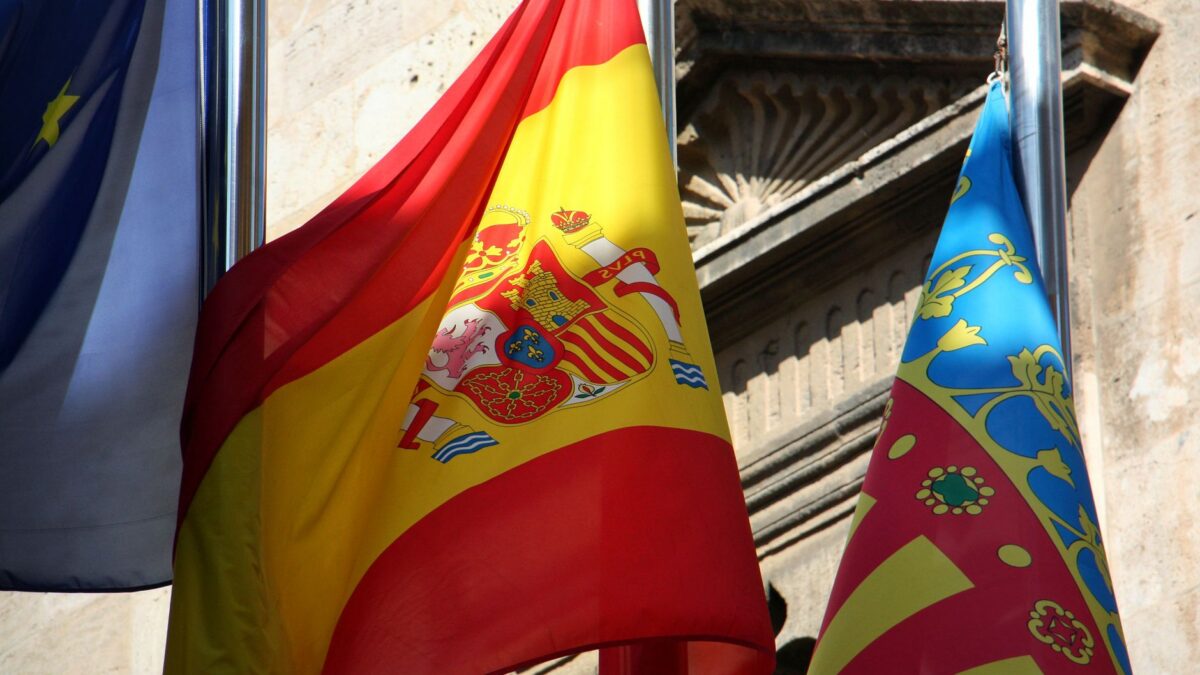
Constitution Day (Día de la Constitución Española) is a public holiday in Spain on Dec. 6 because on that date in 1978 Spanish voters approved the current Constitution in a referendum. The text is the supreme law of the country and closed the transition from the Franco dictatorship to democracy. In Madrid, as in the rest of Spain, the day falls two days before another holiday, the Immaculate Conception on Dec. 8, which is why early December often turns into a long weekend.
What happened on Dec. 6, 1978?
Spaniards voted in a constitutional referendum and 91.81% of voters backed the new text. The Constitution of Spain had already passed the Cortes Generales (the Spanish parliament) on Oct. 31, 1978, so the referendum was the step that put it in the hands of the electorate.
Two more dates followed that month. King Juan Carlos I sanctioned the Constitution on Dec. 27, and it was published in the Boletín Oficial del Estado (the official state gazette) on Dec. 29, the day it took effect. The holiday commemorates the vote, which is why it is held on Dec. 6 and on neither of the later dates.
Why did Spain need a new constitution?
Spain was leaving a dictatorship. General Francisco Franco, who had ruled as a military dictator for nearly 40 years, died on Nov. 20, 1975, and the country began a gradual political change known as the transition to democracy. The Constitution was approved three years after his death.
A general election in 1977 produced the Cortes Constituyentes, a parliament that also acted as a constitutional assembly, with the job of drafting and approving the text. Once in force, the Constitution repealed the Fundamental Laws of the Realm, which had worked as the constitution of the Francoist regime, along with every earlier law that contradicted it.
Spain had written constitutions before, starting with the one of 1812. The 1978 text is described as the first that no single party imposed, because it came out of a compromise negotiated among all the major parties.
Who wrote the 1978 Constitution?
A seven-member panel of elected deputies wrote the draft. The press called them the padres de la Constitución (fathers of the Constitution), and they were picked to represent a parliament that was wide and often deeply divided. The governing party of the time, the Union of the Democratic Centre (UCD), which no longer exists, had the leading role and three of the seats.
- Gabriel Cisneros (UCD)
- José Pedro Pérez-Llorca (UCD)
- Miguel Herrero y Rodríguez de Miñón (UCD)
- Miquel Roca i Junyent (CDC)
- Manuel Fraga Iribarne (AP)
- Gregorio Peces-Barba (PSOE)
- Jordi Solé Tura (PSUC)
The writer Camilo José Cela, then a senator by royal appointment, later polished the wording. Few of his changes were accepted, because much of the agreement between parties depended on keeping some phrases ambiguous.
What does the Constitution say?
Article 1 defines Spain as a social and democratic state under the rule of law, whose highest values are liberty, justice, equality and political pluralism. Article 1.2 places national sovereignty in the Spanish people, and Article 1.3 makes parliamentary monarchy the political form of the state.
The rest is organized in ten parts, plus a preamble and an introductory section called the Título Preliminar. Part I covers fundamental rights and duties. The following parts deal with the Crown, the Cortes Generales, the Government and its relations with parliament, the courts, the economy and public finances, the territorial organization of the state, the Constitutional Court and the rules for amending the text.
Two features affect daily life in Madrid. The Presidente del Gobierno (prime minister) is invested by parliament and answers to it, and the text allows a constructive vote of no confidence, an idea taken from Germany’s Basic Law. Part VIII sets up a unitary but heavily decentralized country, known as the Estado de las Autonomías (state of the autonomies). That is the reason the Comunidad de Madrid (Madrid regional government) has its own powers and its own regional holiday on May 2.
The Constitution is also one of the subjects in the civic knowledge test for Spanish nationality by residence, so foreign residents who apply will meet it again.
Has the Constitution been changed?
It has been amended only three times since 1978. Article 13 was reformed in 1992, Article 135 in 2011 and Article 49 in 2024, with the last amendment dated Feb. 15, 2024. The procedure for amendments is set out in Part X of the text itself.
How does the holiday work in Madrid?
Dec. 6 is on the national list of public holidays in Spain, so it applies in Madrid city and across the region. Each municipality can have a maximum of 14 public holidays per year. A maximum of nine are chosen by the national government and at least two are chosen locally. In practice the regional governments can choose up to three.
When a national holiday falls on a Sunday, the regional government can move the day off to another date or leave the choice to local authorities. In a year when Dec. 6 lands on a Sunday, check which day the Comunidad de Madrid has declared a holiday before you plan around it. The site’s calendar of Madrid public holidays and long weekends lists the dates for next year.
Because Dec. 8 is also a holiday, many workers take a day off between or beside the two dates. Spaniards call this a puente (bridge): when a holiday falls on a Tuesday or Thursday, some people take the Monday or the Friday to make a four-day long weekend. Trains and buses out of the city are busier on those days, so book early if you are planning one of the day trips from Madrid by train or bus.
Quick answers
Is Dec. 6 a holiday everywhere in Spain?
Yes. Constitution Day appears on the national holiday calendar, which is set by the national government and observed in every autonomous community.
When did the Constitution take effect?
On Dec. 29, 1978, the day it was published in the Boletín Oficial del Estado. The referendum that the holiday remembers took place earlier, on Dec. 6.
Where is the original text kept?
The Constitution is held at the Congress of Deputies, the lower house of the Cortes Generales, in Madrid.
What system of government did it create?
A parliamentary monarchy. The King is head of state, parliament has two chambers and the executive is the Government led by the Presidente del Gobierno.
Checked against official sources in November 2026. Hours, prices and rules change: confirm on the official page before you go or apply.