Madrid Teacher Strike Stalls Classes in Poorer Districts Since Oct. 14
Madrid's open-ended teacher strike has left many subjects untaught since Oct. 14, and schools in Vallecas and Villaverde are bearing most of it.
The open-ended teachers’ strike in Madrid’s public schools is falling hardest on the schools with the poorest pupils, El País reports. Staff there are the most likely to walk out, and many subjects have not moved forward since the strike began on Oct. 14.
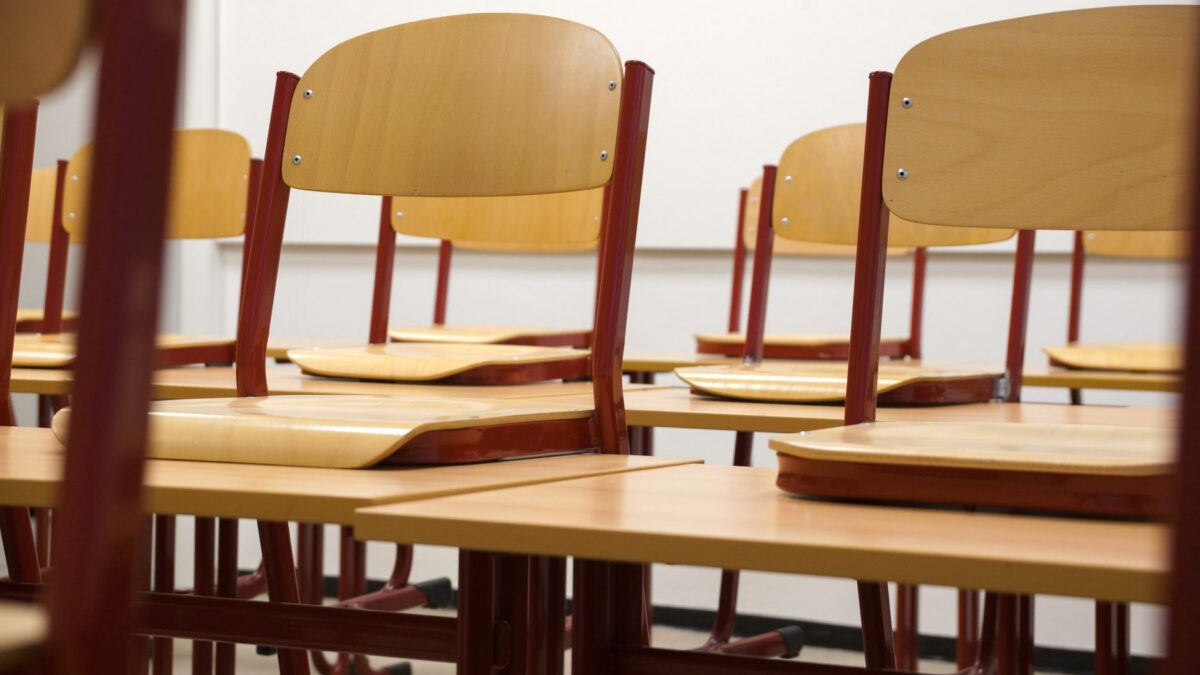
In a classroom whose teacher is on strike, pupils are supervised by whoever is on minimum services (the skeleton staffing required during a strike), and that person can end up watching several groups at once. Teachers told the newspaper that exams and grading for the term will have to be redesigned.
One teacher for four classes at a Vallecas school
The Instituto Tirso de Molina is a public secondary school in Vallecas, opposite Buenos Aires metro station. It was founded in 1968 and has almost a thousand students. The Comunidad de Madrid (Madrid regional government) classifies it as a centre of “difícil desempeño”, a label for schools considered especially difficult because of their pupils’ circumstances.
Eva Enebral, 51, teaches Spanish language and literature there and has a son in the final year. She told El País she was on strike without a break from Oct. 14 to Wednesday, Nov. 4, and went back for a few hours only to give an exam agreed with her pupils. It covered set books, the one piece of work she could ask them to do on their own.
Her colleague Antonio García, 50, was on minimum services a few days ago with four classes of ESO (compulsory secondary education) to supervise at the same time. Each group stayed in its own room while he watched from the corridor. An electronic screen in one of the classrooms was smashed by a blow. “It is chaotic, but it is nothing new,” García told the newspaper. He blames the regional administration, which he accuses of fighting a war of attrition with schools.
Counsellor says 41 pupils are under self-harm or suicide protocols
Víctor, one of the school’s counsellors, told El País that 41 of its pupils have an open protocol for a suicide attempt, suicidal thoughts or self-harm. Four days before he spoke to the paper he had sent reports on four students at risk to four separate teaching teams.
By his account, teachers at schools like this one also do work that belongs to the health system and social services, and those gaps show once the teachers are gone. He said the problem lies in the reasons the strike was called.
Philosophy on hold at a Villaverde school
David Domínguez, 45, teaches philosophy at a secondary school in Villaverde that he asked El País not to name. His whole department joined the strike on Oct. 14. Final-year students had just started Aristotle and have gone no further.
On many days between 20 and 30% of the school’s staff are on strike, enough to keep lessons from returning to normal. Pupils spend many hours in their usual room with nothing being taught. When too few teachers are present, two or three classes are put together in the yard or the gym, and a single teacher on minimum services can be left with 70 teenagers.
Citing figures from his union that he did not detail, Domínguez said turnout is far higher in Madrid’s working-class belt: Vallecas, Carabanchel, Villaverde, Usera, San Blas and Getafe. Teachers there earn the same as those in Tres Cantos or Pozuelo, he said, but work with the most segregated pupils. He described students who arrive in worn clothes, bring no snack and do homework on a phone because there is no internet at home. Staff can attend to them only by working 12 and 13 hours a day, he said.
The regional education chief (consejera) has called the strikers irresponsible, according to Domínguez. He says the responsibility is hers, as the employer.
What it means for families and grades
Families with children at schools where turnout is high have gone almost a month without progress in the affected subjects. Domínguez said his department will not advance a page of the syllabus while the strike lasts, because strikers are not obliged to.
Grading is the next problem. A school where around 30% of teachers are out has some subjects taught as usual and others untouched. Domínguez expects assessment criteria and the weight given to each term to change. “You cannot examine what you have not taught,” he said. How schools will do that has not been settled.
Source: El País