Spanish Civil War Sites in Madrid: University City and Casa de Campo
The Spanish Civil War front ran through University City and Casa de Campo in Madrid. Here is what happened there and what is left to find.
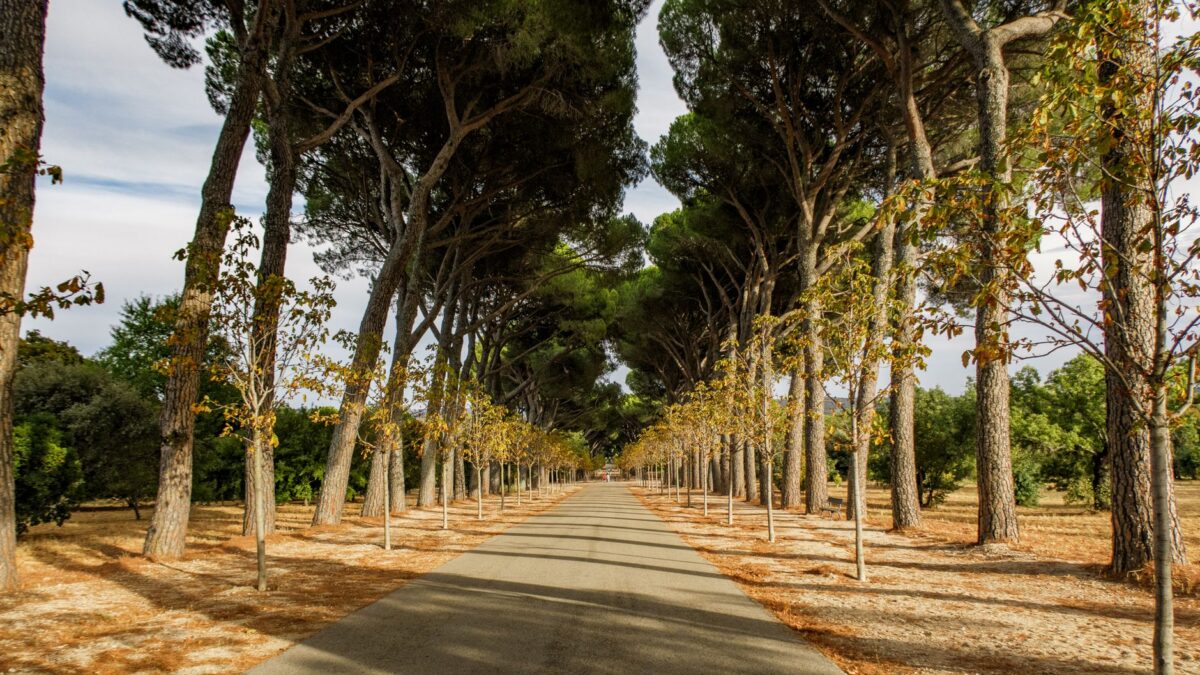
The Spanish Civil War front in Madrid ran through the Ciudad Universitaria (University City, the university campus near Moncloa) and the Casa de Campo (the city’s largest public park). Both are open to visitors today, but the fighting left little on view. Reconstruction after the war and later city works covered most of the scars, so a visit is mostly about knowing what happened where you are standing.
The siege of Madrid lasted from Nov. 8, 1936, to March 28, 1939, according to Wikipedia’s article on the siege. The Nationalist assault on the city, led by General Francisco Franco’s forces, took place between Nov. 8 and early December 1936.
What happened at Ciudad Universitaria in November 1936?
The Battle of Ciudad Universitaria was fought from Nov. 15 to 23, 1936, on the new campus. Wikipedia’s article on the battle lists Republican forces of 11,000 Central Army troops, 1,800 International Brigades volunteers and 1,400 Durruti Column militiamen. The attackers were the Army of Africa, with 3,000 regulares and 18 light tanks. The result was a Republican victory, and it was the first time Franco’s troops were stopped.
The campus was not a finished university. The faculties of Medicine, Pharmacy and Odontology had begun building on Nov. 6, 1930, and work on the Hospital Clínico started in 1932. The war halted construction, and the inauguration planned for the last months of 1936 never happened. The buildings were used as a battlefield instead of for teaching. Fighting went on inside them, room by room and floor by floor.
The attackers ended the battle on Nov. 23 by changing strategy. They chose to attack Madrid indirectly, with a maneuver on the Las Rozas-Húmera axis, which led to the Battle of Jarama in February 1937 and the Battle of Guadalajara in March 1937.
The campus front line was wedge-shaped, with the Clínico at the tip, and it stayed practically the same for the rest of the war. Mines and countermines were used in the Ciudad Universitaria and the Parque del Oeste, and the infantry offensives failed until Colonel Segismundo Casado surrendered the city on March 28, 1939.
Where did the front line run through Casa de Campo?
The Casa de Campo is a former royal hunting estate west of the Royal Palace. It opened to the public in 1931 and covers 1,722.6 hectares, according to Wikipedia’s article on the park. From 1936 to 1939 the front lines of the siege ran through it. The Republicans had halted a Nationalist offensive there in November 1936.
The assault on the city began on Nov. 8, 1936, with an approach through the Casa de Campo. It was bloody for both sides, and the attackers advanced slowly through the park to a stream of the river Manzanares. They then had to cross bridges held by militia, and after several failed attempts they reached the far bank through the gap between two bridges. The fight then spread onto the campus on Nov. 15.
What can you still see today?
Less than most visitors expect. The battle article says the scars were hidden by the rebuilding of the faculties, the rebuilding of the surrounding Moncloa-Aravaca district, the urbanization of the 1970s and later projects such as burying the M-30 ring road and creating parks on the Manzanares, including Madrid Río. The sources do not list any preserved trenches or marked battlefield trails, so check with the Ayuntamiento de Madrid (Madrid City Council) or the park before planning a visit around one.
Some traces are monuments from the other side of the story. After the war the Nationalist authorities rebuilt the university in the 1940s and put up memorials to Franco’s victory. The Arco de la Victoria was built between 1950 and 1956. The Monumento a Los Caídos Por España is now the headquarters of the Junta Municipal del Distrito de Moncloa-Aravaca (the district council). Both are in the area where the fighting took place.
The Casa de Campo itself is the easier half of the day. Its natural vegetation is mainly holm oak forest with Mediterranean bushes. The park holds the Parque de Atracciones de Madrid (amusement park), the Madrid Zoo and an artificial lake, and 18 trees or groups of trees were classified as Singular Trees in 2000 and are marked with wooden signs.
How do you get to the sites?
The park is connected to the Metro de Madrid network, with stations on lines 5 and 10. The Teleférico de Madrid, a gondola lift, links the Parque del Oeste to the Casa de Campo. The pick-up point is inside the Parque del Oeste on the western edge of the city. The drop-off point has a restaurant with a view over Madrid, playgrounds and access to the park’s trails.
The Parque del Oeste is itself part of the story, since the front ran there too. For the campus, the Moncloa area is the reference point. If you arrive from outside the city, the Cercanías commuter train guide covers lines and fares, and the airport to city guide compares ways in from Barajas.
Tips for visiting
- Read the account of the battle first. Without it, the campus looks like an ordinary university district.
- Combine the campus and the park in one day. The Teleférico links the Parque del Oeste to the Casa de Campo, which saves a long walk.
- Expect memorials from the Franco period rather than preserved positions, and check the official page of any site for opening times.
- Winter storm Filomena in 2021 destroyed at least a tenth of the trees in Madrid and damaged an unknown share of the park, so paths and views may differ from older descriptions.
Quick answers
When was the Battle of Ciudad Universitaria?
It was fought from Nov. 15 to 23, 1936, as part of the siege of Madrid.
Who won it?
The Republic won. The attackers stopped the direct assault on Nov. 23 and changed strategy.
Is the Casa de Campo open to the public?
Yes. It became a public park in 1931 and is now a popular weekend destination for Madrid residents.
Was the campus used as a university during the war?
No. The buildings were used as a battlefield, and normal academic activity in some buildings came only years later.
Checked against official sources in November 2026. Hours, prices and rules change: confirm on the official page before you go or apply.