History of the Prado Museum: From Royal Collection to 1819
The Prado opened in November 1819 in a building planned in 1785 for natural history. How the royal collection became Madrid's national art museum.
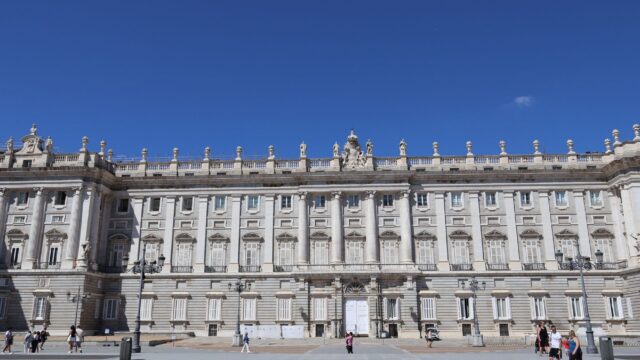
The Museo Nacional del Prado (the national Prado Museum) opened to the public in November 1819 as a royal museum of paintings and sculpture. Its home on Paseo del Prado was designed in 1785, and the paintings that filled it came from the Spanish royal collection.
The outline below follows Wikipedia’s article on the museum, which lists Nov. 19, 1819, as the date of establishment.
A building planned for natural history
Architect Juan de Villanueva designed the building in 1785 on the orders of Charles III. It was meant to house the Natural History Cabinet, not paintings.
Its final use was settled later. Charles III’s grandson, Ferdinand VII, was encouraged by his wife, Queen María Isabel de Braganza, to make it a Royal Museum of Paintings and Sculptures instead.
From royal collection to public museum
The new museum had two aims: to show the artworks owned by the Spanish Crown, and to show the rest of Europe that Spanish art was as good as any other national school. It soon became known as the National Museum of Painting and Sculpture and later as the Museo Nacional del Prado.
The first catalogue came out in 1819 and covered only Spanish painting, with 311 paintings. At the time the museum actually held 1,510 paintings brought from the royal residences, the Reales Sitios, including works from other schools.
How the royal collection grew
The collection at the core of the Prado began to grow significantly in the 16th century under Charles V. The Habsburg and Bourbon monarchs who followed kept adding to it.
Works that came from this royal line include Las Meninas by Velázquez, The Garden of Earthly Delights by Hieronymus Bosch, The Family of Charles IV by Goya and Equestrian Portrait of Charles V by Titian. Velázquez also had a hand in the Italian paintings: his eye brought much of the fine Italian collection to Spain, which is now one of the largest outside Italy.
Nationalization and expansion
In 1868, when Isabella II was deposed, the museum was nationalized and took the name Museo del Prado. The building soon proved too small, and its first enlargement came in 1918.
Other collections joined it. The Museo de la Trinidad was merged in 1872, and the Museo de Arte Moderno in 1971; most of the museum’s 19th-century paintings come from the latter. Since the Prado was created, more than 2,300 paintings have entered the collection, along with sculptures, prints, drawings and other works, through bequests, donations and purchases.
Some gifts shaped the collection in particular ways:
- Barón Emile d’Erlanger donated Goya’s Black Paintings in 1881.
- Pedro Fernández Durán left drawings and decorative art, as well as Van der Weyden’s Durán Madonna.
- Pablo Bosch left a collection of medals.
Recent purchases include Goya’s The Countess of Chinchón, bought in 2000, and Fra Angelico’s Madonna of the Pomegranate, bought in 2016.
The Prado now
The collection currently comprises around 8,200 drawings, 7,600 paintings, 4,800 prints and 1,000 sculptures, plus other works and historic documents. As of 2012, about 1,300 works were on display in the main buildings. Another 3,100 were on temporary loan to museums and official institutions, and the rest were in storage.
The museum had 3,337,550 visitors in 2023, ranking 13th in the world. Miguel Falomir is its director. With the Thyssen-Bornemisza Museum and the Museo Reina Sofía, the Prado forms Madrid’s Golden Triangle of Art along Paseo del Prado, which was added to the UNESCO World Heritage list in 2021.
For visiting, our comparison of free museum hours at the Prado, Reina Sofía and Thyssen covers when to go. On wet days, the Prado also appears in our list of museums and indoor sights in Madrid.
Quick answers
When did the Prado open?
The museum opened to the public for the first time in November 1819.
Who designed the Prado building?
Juan de Villanueva designed it in 1785 for Charles III, originally to house the Natural History Cabinet.
When did it get its current name?
The name Museo del Prado dates from 1868, when the museum was nationalized after Isabella II was deposed.
What else is in the Golden Triangle of Art?
The Thyssen-Bornemisza Museum and the Museo Reina Sofía, both near the Prado along Paseo del Prado.
Checked against official sources in November 2026. Hours, prices and rules change: confirm on the official page before you go or apply.