Income Tax in Madrid: IRPF Brackets, Regional Deductions and Examples
How the state and Comunidad de Madrid halves of IRPF add up, which deductions only Madrid residents can claim, and what a €30,000, €50,000 or €80,000 salary pays.
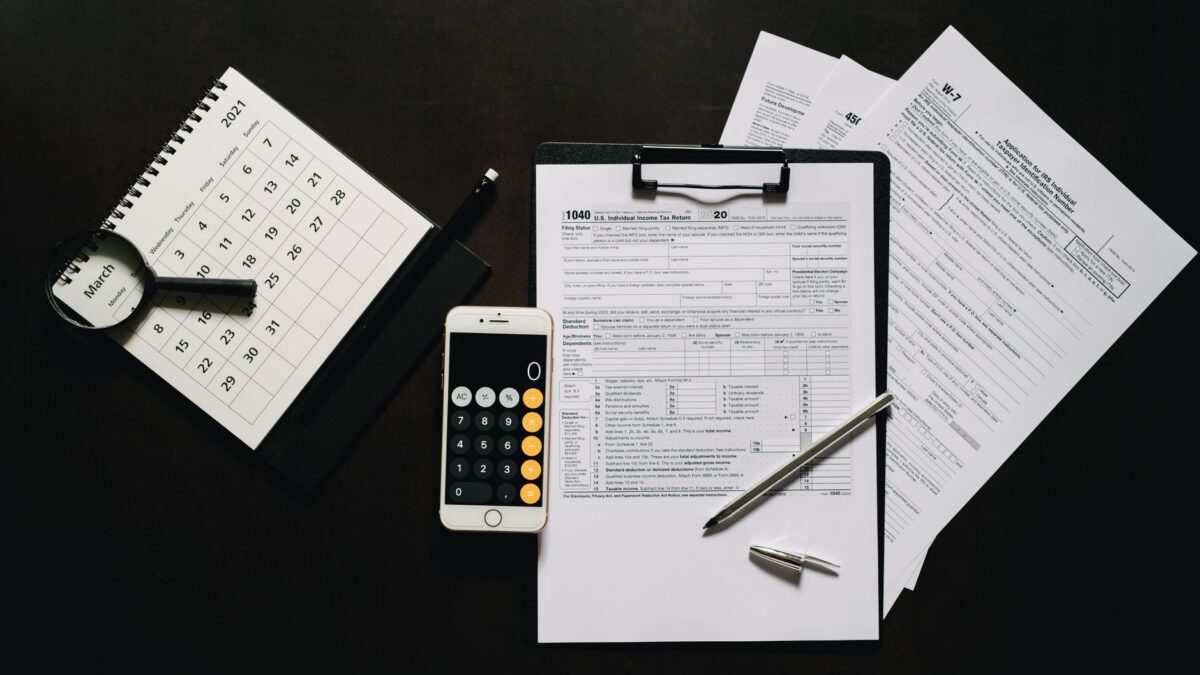
Madrid residents pay Spanish income tax (IRPF) in two halves: a state scale from 9.5% to 24.5% and the Comunidad de Madrid’s own scale from 8.5% to 20.5%. Combined, the marginal rate runs from 18% on the first euros to 45% above €300,000, as of November 2026, one of the lowest regional scales in Spain.
How does IRPF work for Madrid residents?
IRPF (Impuesto sobre la Renta de las Personas Físicas) is charged on your worldwide income if you are a Spanish tax resident. You usually become resident by spending more than 183 days in Spain in a calendar year or by having your main economic interests here. Which region’s scale applies depends on where you lived for most of the year, so a person who moved from abroad to Madrid in March uses the Madrid scale for that year.
Every euro of your general taxable base (salary, self-employment profit, rent) is taxed twice over: once with the state scale and once with the regional one. The two results are added. Savings income such as interest, dividends and capital gains goes into a separate savings base with its own rates.
The annual return (declaración de la renta) for one year is filed with the Agencia Tributaria between April and June of the next year. Employers withhold tax from each payslip during the year, and the return settles the difference.
What are the Madrid and state tax brackets?
The Comunidad de Madrid’s scale is set in its consolidated tax law, published on the BOE’s consolidated text of Decreto Legislativo 1/2010. It was last changed by Ley 13/2023 and applies unchanged for tax years 2025 and 2026. The state scale is set in the IRPF law.
| Taxable base (€) | State rate | Madrid regional rate |
|---|---|---|
| 0 to 12,450 | 9.5% | 8.5% (up to 13,362.22) |
| 12,450 to 20,200 | 12% | 10.7% (13,362.22 to 19,004.63) |
| 20,200 to 35,200 | 15% | 12.8% (19,004.63 to 35,425.68) |
| 35,200 to 60,000 | 18.5% | 17.4% (35,425.68 to 57,320.40) |
| 60,000 to 300,000 | 22.5% | 20.5% (above 57,320.40) |
| Above 300,000 | 24.5% | 20.5% |
The brackets of the two scales do not line up exactly, so the combined marginal rate changes at more points than the table suggests. Madrid also uses a higher personal allowance on its half: the regional mínimo del contribuyente is €5,956.65 a year, against €5,550 on the state half.
In January 2026 the regional president announced a further cut of half a point on each regional bracket, so the rates would run from 8% to 20%. As of November 2026 it has not been passed by the Asamblea de Madrid and would apply from tax year 2027 at the earliest.
Which deductions can only Madrid residents claim?
The Comunidad de Madrid offers its own deductions on the regional half of the tax. Most have income limits based on your taxable base, and you claim them in the annual return. The amounts below are those the Agencia Tributaria lists for tax year 2025 in its guide to Madrid regional deductions.
| Deduction | Amount | Main conditions |
|---|---|---|
| Rent of your main home | 30% of rent paid, up to €1,237.20 a year | Under 40 on Dec. 31; taxable base up to €26,414.22 (individual) or €37,322.20 (joint); rent above 20% of your base; deposit lodged with the Comunidad |
| Birth or adoption | €721.70 per child, in the year of birth and the two following years | Taxable base up to €30,930 (individual) or €37,322.20 (joint); family total up to €61,860 |
| Education costs | 15% of private schooling and language classes, 5% of uniforms; up to €927.90 per child for schooling, €1,031 for nursery (0 to 3) | Family base up to €30,930 per family member; fees at free public and concertado schools do not count |
| Childcare by a domestic employee | 25% of the Social Security contributions you pay for the employee, up to €463.95 (40% and €618.60 for large families) | Child under 3 or a dependent relative at home; employee working at least 40 hours a month |
| New residents who invest | 20% of the purchase value of shares or bonds | Moved to Madrid from abroad from 2024, not resident in Spain in the previous five years; hold the investment for six years |
Families with children usually get more from the education and birth deductions than from anything else on the list. Keep invoices and payment receipts: the tax office asks for them when it reviews a return.
How much tax does a salary of €30,000, €50,000 or €80,000 pay?
The table below is a worked estimate for a single employee with no children and no other income, tax year 2026. It deducts the employee’s Social Security contributions (6.5% of salary up to the contribution ceiling), the standard €2,000 allowance for work expenses and the personal allowances. The last column shows what the regional half would cost if Madrid used the same rates as the state half, which is roughly how regions with higher scales compare.
| Gross salary | State half | Madrid half | Total IRPF | Share of gross | Regional half at state rates |
|---|---|---|---|---|---|
| €30,000 | ≈ €2,460 | ≈ €2,140 | ≈ €4,600 | 15% | ≈ €2,460 (+€330) |
| €50,000 | ≈ €5,600 | ≈ €4,960 | ≈ €10,560 | 21% | ≈ €5,600 (+€640) |
| €80,000 | ≈ €11,580 | ≈ €10,570 | ≈ €22,150 | 28% | ≈ €11,580 (+€1,010) |
These are estimates, not a tax calculation for your case. Children, a mortgage from before 2013, pension plan contributions, joint filing or a regional deduction all change the result. The Agencia Tributaria’s free simulator gives a closer figure once you enter your own data.
What if you just moved to Madrid from abroad?
In your first year you may be resident for tax purposes or not, depending on the 183-day rule. If you are not resident, you pay non-resident income tax only on Spanish income and none of the scales above apply. If you moved for a job and meet the conditions, the special regime for inbound workers taxes employment income at a flat 24% instead, explained in our guide to the Beckham law in Spain. People working for themselves should read our guide to becoming autónomo in Madrid, since quarterly payments work differently.
Filing is online, and you need a way to identify yourself: Cl@ve, a digital certificate or a reference number from the tax office. Our guide to the digital certificate and Cl@ve in Madrid covers how to get one. For cross-border income or double tax treaties, check with the Agencia Tributaria or a licensed asesor fiscal.
Bottom line
Check in January that your employer has your correct personal data (children, disability, region), because withholding is based on it and a wrong form means a large bill in June. If you rent and are under 40, ask your landlord for the receipt showing the deposit was lodged with the Comunidad: without it you cannot claim the rent deduction.
FAQ
Is income tax lower in Madrid than in other regions?
For most incomes, yes. As of November 2026 the Comunidad de Madrid applies one of the lowest regional scales in Spain, from 8.5% to 20.5%. The state half is the same everywhere outside the Basque Country and Navarre.
Do I pay Madrid’s rates if I moved in the middle of the year?
You use the scale of the region where you lived for most of the tax year. If you arrived after early July, another region’s scale or non-resident rules may apply for that first year.
Can a 38-year-old renting a flat in Madrid claim the rent deduction?
Yes, if the taxable base is under €26,414.22 filing alone, the rent exceeds 20% of that base and the contract is for at least one year. The deduction is 30% of the rent, up to €1,237.20 a year.
When is the 2026 tax return filed?
The return for tax year 2026 is filed in spring 2027, usually from early April to the end of June. The Agencia Tributaria confirms the exact dates each year.