Taxi vs Uber, Cabify and Bolt in Madrid: Fares and Rules
Official 2026 taxi tariffs, supplements and the airport flat fare, how Uber, Cabify and Bolt set prices, and which works out cheaper for common trips.
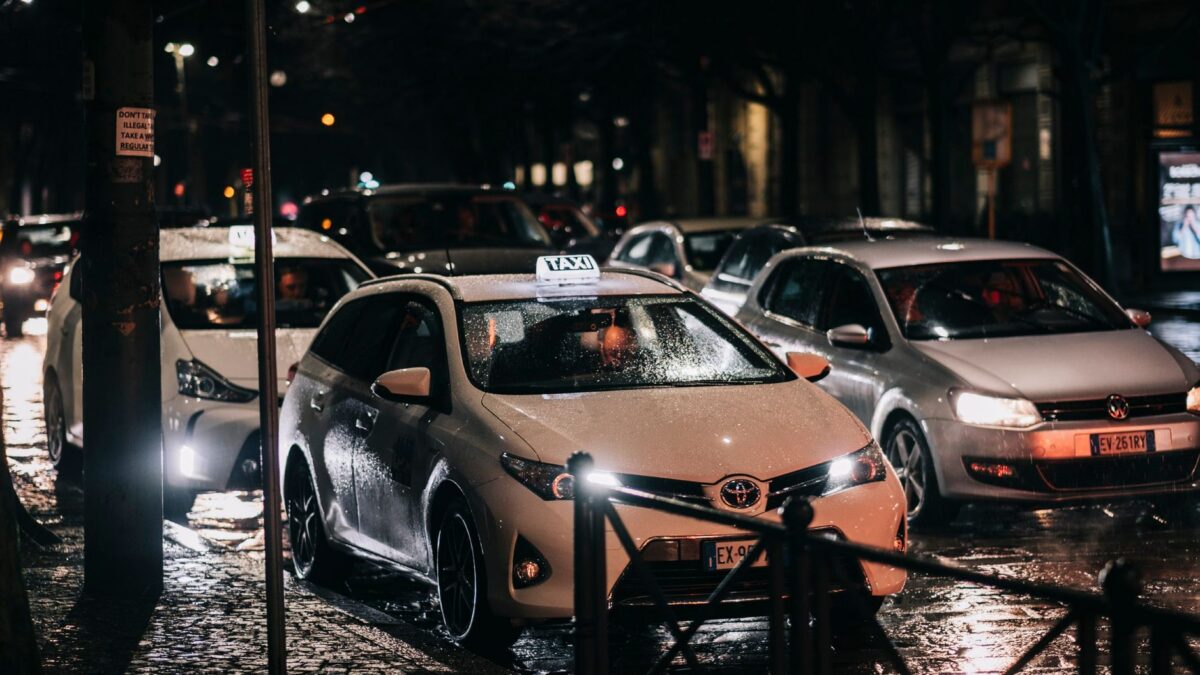
A Madrid taxi costs €2.55 to start on weekdays by day and €3.20 at night and weekends, then €1.40–1.60 per km, as of November 2026. Trips between Barajas airport and anywhere inside the M-30 cost a flat €33. Uber, Cabify and Bolt quote a fixed price in the app before you book, which can be lower off-peak and higher when demand is high.
What are the official taxi tariffs in 2026?
Taxi fares in Madrid are set each year by the city and apply from 1 January. The meter charges by distance or by time, whichever applies to the speed of traffic at that moment. The 2026 figures published on Madrid’s official tourism site are:
| Day rate (Mon–Fri 7:00–21:00, not holidays) | Night, weekend and holiday rate | |
|---|---|---|
| Start of trip | €2.55 | €3.20 |
| Per km | €1.40 | €1.60 |
| Per hour (slow traffic, waiting) | €27 | €29 |
Fixed fares and supplements, as of November 2026:
- Airport flat fare: €33 between any Barajas terminal and any point inside the M-30, in either direction, day or night. No supplements can be added.
- Airport trips outside the M-30: the meter runs, and short trips carry a minimum fare.
- Train and bus stations and IFEMA: trips starting at Atocha, Chamartín, the Avenida de América and Méndez Álvaro bus stations, or the IFEMA fairgrounds start at €8.
- Christmas Eve, New Year’s Eve and the night of 5 January: a €7 supplement on trips ending between 21:00 and 6:00.
- Booked by app or phone: a minimum of €5 in the city (zone A) to cover the drive to your pickup point.
How do you hail and pay for a taxi?
Madrid taxis are white with a diagonal red stripe on the front doors. A green light on the roof means the car is free. You can raise your hand on the street, go to a rank (a blue sign with a white T) or book by app or phone. At the airport, train stations and bus stations you must take a taxi from the rank.
All taxis must accept bank cards, and drivers must carry change for notes up to €20. Ask for a receipt: it must show the fare, the date and the licence number. The city’s official taxi app, TXMAD, gives information on the service and lets you request a taxi.
How do Uber, Cabify and Bolt set their prices?
Ride-hailing cars in Spain run under a separate licence called VTC (vehículo de turismo con conductor). In Madrid they cannot be hailed on the street or wait at taxi ranks; you book them through the app. The app shows a closed price before you confirm, based on the route, the expected time and demand at that moment. At busy times, such as rain, the end of a concert or the morning airport rush, that price can rise well above a taxi fare. At quiet times it can be lower. Taxi apps can also offer fixed prices for booked trips.
There are no public tariffs for VTC, so the only reliable comparison is in the moment: check the app price against an estimate of the taxi meter.
Which is cheaper for typical trips?
The table estimates the taxi meter on distance alone, using the 2026 tariffs. In real traffic the time rate kicks in and the fare rises, so treat these as minimums.
| Trip | Taxi estimate (distance only) | Taxi: what to expect | VTC app |
|---|---|---|---|
| 3 km in the center, weekday afternoon | €2.55 + 3 × €1.40 = €6.75 | More in slow traffic, when the time rate applies | Price shown in app; check at the time |
| 8 km across town at night | €3.20 + 8 × €1.60 = €16.00 | Close to the estimate, roads are quieter | Price shown in app; compare before booking |
| From Atocha station, 4 km | Starts at €8 from the station | Station start price applies | No station start price; check the app |
| Airport to Sol or Salamanca | €33 flat | Fixed, no supplements | Varies; compare with €33 |
| Christmas Eve, 23:00 | Night rate + €7 | Supplement applies | Prices tend to rise with demand |
For many trips public transport is cheaper still; see our guides to getting from the airport to the city and to Metro hours and night buses.
What about safety and complaints?
- Check the car. Licensed taxis show their licence number and tariff card inside. In an app, check that the plate and driver match before you get in.
- Complaints about a taxi in Madrid city: drivers must carry official complaint forms (hojas de reclamaciones). Complaints go to the Ayuntamiento’s taxi service, in person or online with a digital certificate, according to the Comunidad de Madrid consumer office.
- Fare disputes or lost luggage: you can ask for arbitration at the Juntas Arbitrales del Transporte.
- VTC complaints: go first through the app’s support; if that fails, the regional consumer office handles consumer complaints. See the Comunidad de Madrid page on taxi passenger rights.
- Lost property: call the taxi company or use the app; items left in taxis can also end up at the city’s lost property office.
Bottom line
For the airport, the €33 taxi is a known price that apps rarely beat by much. For short trips in the city, open the app, note its price and compare it with the taxi estimate in the table; if the app price is surging, hail a taxi on the street.
FAQ
Do Madrid taxis take cards?
Yes. All Madrid taxis must accept card payment, and drivers must have change for notes up to €20.
Is the €33 airport fare per person?
No. It is per taxi, inside the M-30, with no extra charges for luggage or night travel.
Can I hail an Uber or Cabify on the street?
No. VTC cars must be booked through the app. Only taxis can be hailed or taken from a rank.
Why does the taxi meter keep running in traffic?
When the car moves slowly or stops, the meter switches from the per-km rate to the hourly rate of €27 by day or €29 at night.