Royal Alcázar Fire in Madrid: How a Palace Replaced It
The Royal Alcázar of Madrid burned for four days on Christmas Eve 1734. See what was lost, what was saved and how the Royal Palace was built on the site.
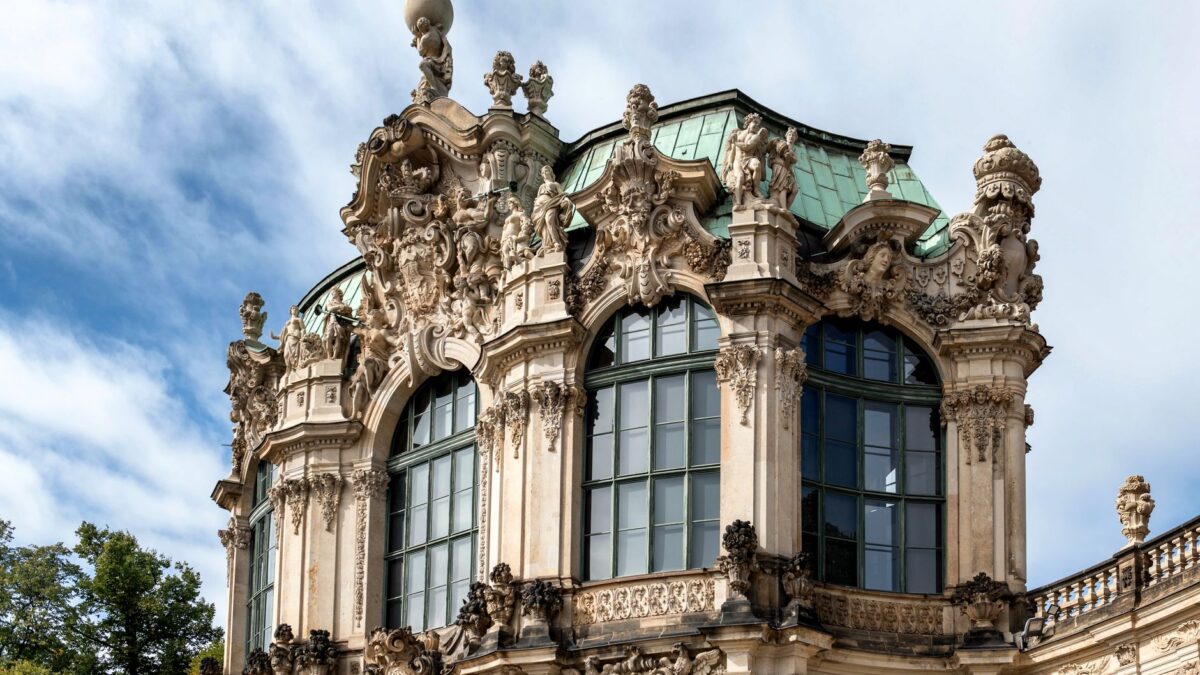
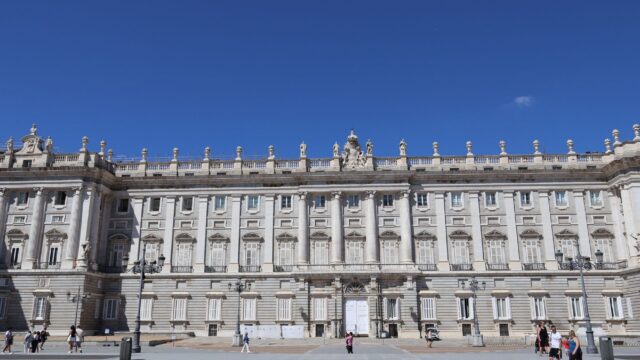
The Royal Alcázar of Madrid, the old fortress turned royal residence, burned down on Christmas Eve 1734. The fire lasted four days and destroyed the building, and King Philip V then ordered a larger palace built from scratch on the same site. That palace is the Royal Palace of Madrid that stands on Bailén Street today.
The story runs from a ninth-century fortress to a Baroque palace, and most of what is known comes from Wikipedia’s pages on the Royal Alcázar of Madrid and on the Royal Palace of Madrid.
What the Alcázar was before the fire
The fortress was built by Muslim rulers, by the Umayyad emir Muhammad I of Córdoba, between 860 and 880. It was the center of an Islamic citadel called Mayrit, a walled district of about 4 ha (9.9 acres) that also held a mosque and the governor’s home. After Alfonso VI of León and Castile conquered Madrid in 1083, he built a bigger fortress to the north of the first walled area. The two pages describe the early site a little differently: the palace page says the Alcázar stood on the site of the Muslim fortress, while the Alcázar page says the Islamic fortress was never under today’s palace.
Over the centuries the castle kept growing. Henry III of Castile added towers, and his son John II built the Royal Chapel and a room known as the Sala Rica, or Room of Riches. Henry IV’s daughter Joanna la Beltraneja was born there on Feb. 28, 1462, and in 1476 her followers were besieged inside during the War of the Castilian Succession, which caused heavy damage.
Charles I, who was also Holy Roman Emperor as Charles V, decided to extend the building after it was damaged in the Revolt of the Comuneros, which ran from 1520 to 1522. Work began in 1537 under the architects Luis de Vega and Alonso de Covarrubias. It added the Patio del Rey (King’s Courtyard), the Queen’s rooms around the Patio de la Reina and the Tower of Charles V, which now overlooks the Sabatini Gardens. These additions are believed to have doubled the original footprint. Philip II made Madrid his capital in 1561, and Philip III and Philip IV added a long southern façade between 1610 and 1636.
When Philip V renovated the royal apartments in 1700, he found the Habsburg Alcázar austere compared with Versailles, where he had spent his childhood. Teodoro Ardemans and René Carlier planned redesigns, and Queen Maria Luisa of Savoy and the Princess of Ursins redecorated the main rooms in the style of French palaces.
The fire on Christmas Eve 1734
The fire started in the rooms of the French painter Jean Ranc. The response was slow because the warning bells were mistaken for the call to mass. For fear of looting, the doors of the building stayed closed, which hampered the rescue. The blaze burned for four days, and the remaining walls were finally pulled down in 1738.
What was lost and what was saved
More than 500 paintings were lost, including the Expulsion of the Moors by Diego Velázquez. Las Meninas, also by Velázquez, was rescued by being thrown out of the windows. Many other pieces survived because shortly before the fire the king had ordered much of his collection moved to the Buen Retiro Palace. For how a royal collection later reached a museum, see the history of the Prado Museum.
Building the new palace
Philip V commissioned the replacement. The Italian architect Filippo Juvarra drew up a lavish project inspired by Bernini’s plans for the Louvre in Paris. He first wanted a different location, but the idea was dropped. His disciple Giambattista Sacchetti continued the work and designed a structure around a large square courtyard, with projecting wings to solve problems of sightlines.
The two pages give different dates for the work. The summary box of the palace page says construction started on April 7, 1735, while its text says construction ran from 1738 to 1755. Ventura Rodríguez, Francesco Sabatini and Martín Sarmiento also worked on the design. Charles III called in Sabatini in 1760 to enlarge the building and first occupied the palace in 1764. Sabatini’s planned north wing was interrupted, and its foundations lie under a platform where the royal stables were built. The stables were demolished in the 20th century and replaced by the Sabatini Gardens.
The palace today
The Royal Palace is the official residence of the Spanish royal family and is used mainly for state ceremonies. It has 135,000 m2 of floor space and 3,418 rooms, and the page calls it the largest palace in Western Europe and the largest royal palace in Europe. It was designated a monument in 1931. The nearest metro station is Ópera. Our guide to visiting the Royal Palace of Madrid covers tickets, free entry and the guard.
Quick answers
When did the Royal Alcázar burn down?
On Christmas Eve 1734, during the reign of Philip V. The fire started in the rooms of the painter Jean Ranc and lasted four days.
Did Las Meninas survive?
Yes. It was rescued by being thrown out of the windows during the fire. The Expulsion of the Moors by Velázquez was lost.
Who designed the new palace?
Filippo Juvarra oversaw the first plans, and his disciple Giambattista Sacchetti continued the work. Ventura Rodríguez, Francesco Sabatini and Martín Sarmiento also took part.
Checked against official sources in November 2026. Hours, prices and rules change: confirm on the official page before you go or apply.