Madrid Planetarium Turns 40 and Opens a Free Exhibition
Madrid's Planetarium has welcomed more than seven million visitors in 40 years. A free exhibition on space discoveries marks the anniversary.
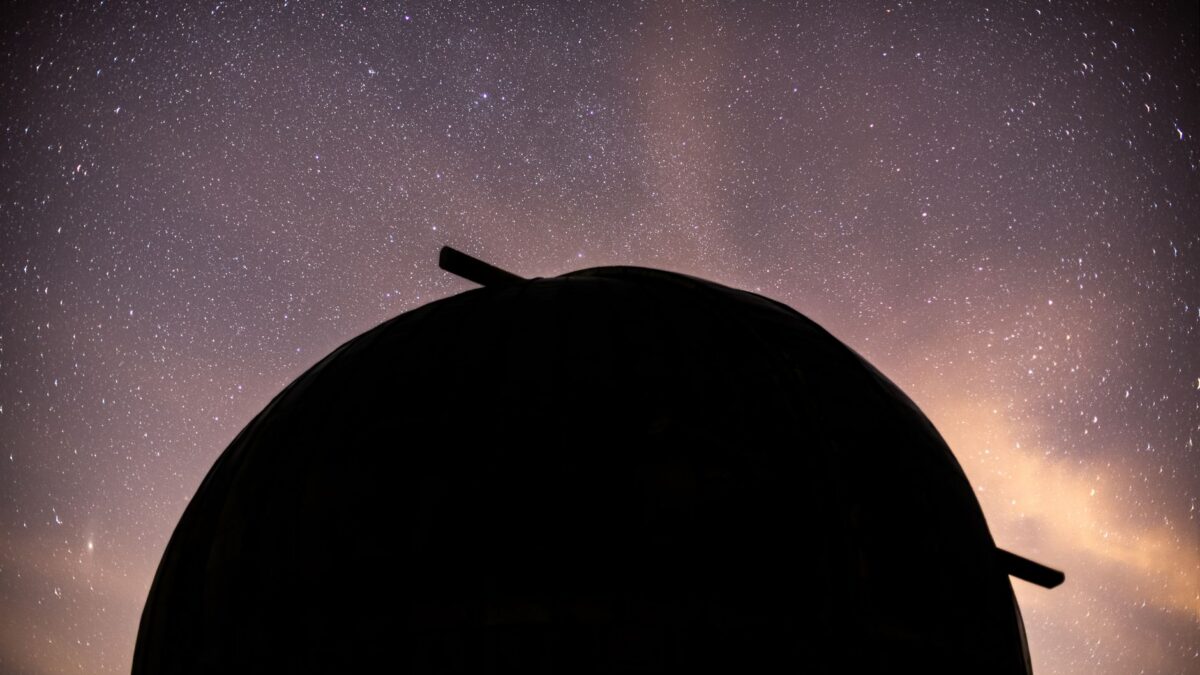
The Planetario de Madrid, the city’s municipal planetarium, turns 40, and the City Council marks the anniversary with a free exhibition called “40 años desvelando el cosmos” (“40 years uncovering the cosmos”). Europa Press reported on Nov. 21 that the centre has received more than seven million visitors since it opened.
The exhibition is in the building next to the planetarium in the Parque de Enrique Tierno Galván. It follows major astronomical discoveries and advances in space exploration since 1986, through images and texts on large telescopes, space probes and the research that changed what is known about the universe.
From slide projectors to a digital dome
The planetarium opened on Sept. 29, 1986. King Juan Carlos and Queen Sofía inaugurated it, together with Juan Barranco, then mayor of Madrid. It was one of the projects pushed by Enrique Tierno Galván, who wanted Madrid to have a space for astronomy and science education, as other large cities did.
The architect was Salvador Pérez Arroyo. At the start, the projection room had almost a hundred slide projectors, a tube screen and black-and-white computers that reproduced the movement of the stars across the dome. The facilities were considered among the most advanced in Europe. The historic Zeiss optical projector from that period is now on display in the lobby.
Between 2016 and 2017 the City Council renovated the building’s technology, architecture and exhibition design, with an investment of more than 4.2 million euros. The work added a hybrid optical-digital system and astronomy software that lets visitors see the sky from different points on Earth, tour the solar system, find exoplanets and travel virtually beyond the Milky Way.
The projection room has a dome 17,5 meters in diameter and space for about 245 people. It uses digital fulldome technology and a Megastar IIA optical planetarium, which can reproduce millions of stars and a realistic night sky.
Schools, courses and a YouTube audience
Education has been one of the planetarium’s main purposes. On school days, mornings are mostly set aside for visits by schools, with activities adapted to different ages. The programming has also included immersive screenings, temporary exhibitions, astronomy and astrophysics courses, lectures, public telescope observations, workshops for children, concerts and book presentations. Its YouTube channel has close to 50.000 subscribers.
What is planned next
The City Council is working on new virtual reality experiences planned for 2027 and 2028. Emilio del Río, the director general of Libraries, Archives and Museums, said so at the latest session of the Culture, Tourism and Sports Committee. Future programming will also include exhibitions on the search for water on other worlds, activities linked to eclipses and a new immersive film titled “Planetas Errantes” (“Wandering Planets”).
Why it matters for Madrid residents
The planetarium is a municipal facility, and the anniversary exhibition is free. For residents, that means a no-cost way to see how astronomy has changed since the building opened, with the older equipment still on view in the lobby.
Source: Europa Press