Schools in Madrid: Public, Concertado and International Compared
The three types of school in Madrid, the bilingual programme, British and American schools, and how the Comunidad de Madrid's admission process and points system work for 2027-28.
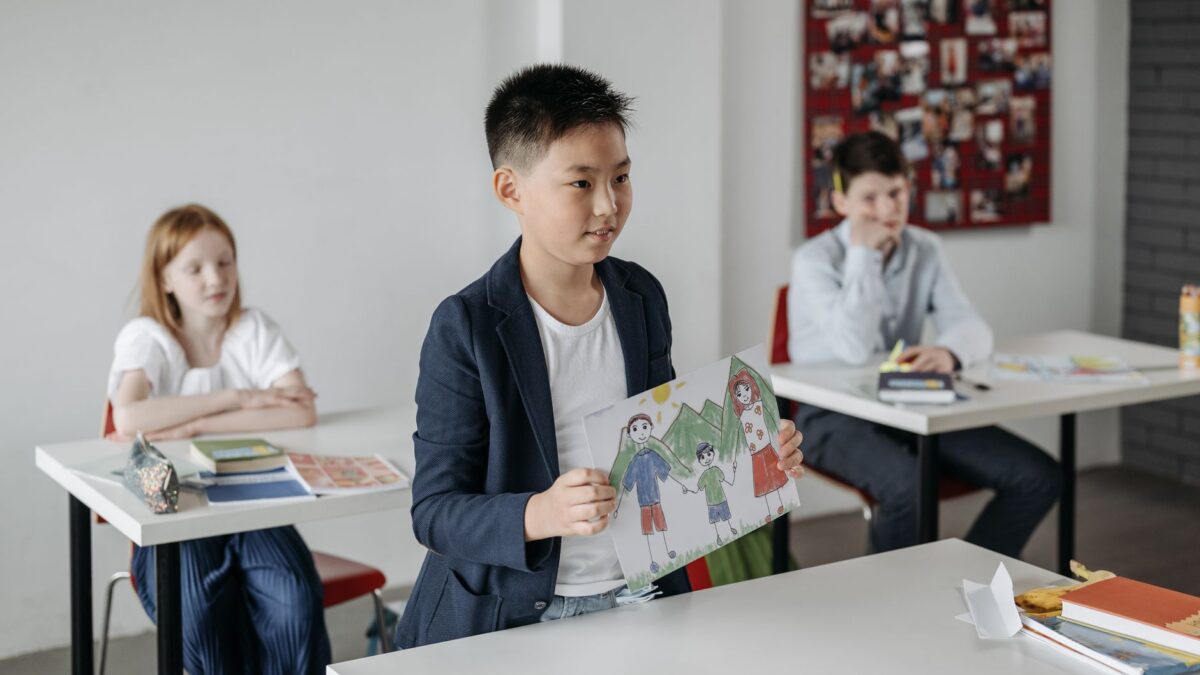
Children in Madrid can attend free public schools, state-funded concertado schools or fee-paying private and international schools. For public and concertado places, families apply once a year through the Comunidad de Madrid’s online system, listing up to six schools; for 2026-27 the application window ran from March 11 to 25, 2026. Private schools set their own admission and fees.
What types of school are there in Madrid?
| Type | Who runs it | Cost | Admission |
|---|---|---|---|
| Public (colegio público, CEIP; instituto, IES) | Comunidad de Madrid | Free tuition; families pay for meals, books in some years, trips and after-school activities | Regional admission process with points |
| Concertado | Private owner, often religious, funded by the Comunidad | No tuition for core teaching; voluntary monthly contributions and paid extras are common | Same regional admission process |
| Private (Spanish curriculum) | Private owner, no public funding | Fees set by the school | School’s own process |
| International (British, American, French, German, IB) | Private owner, often foreign-accredited | Fees set by the school, usually the highest | School’s own process, often with tests and interviews |
School is compulsory from 6 to 16. Most children start earlier, in the free second cycle of early childhood education (infantil, ages 3 to 6), which uses the same admission process.
What is the Comunidad de Madrid’s bilingual programme?
Since the 2004-05 school year, the Comunidad de Madrid has run a Spanish-English bilingual programme in public schools, later extended to secondary schools and many concertados. In bilingual primary schools, a large part of the timetable, including subjects such as science, is taught in English; maths and Spanish are taught in Spanish.
In secondary schools, students follow either the sección (more subjects in English) or the programa (more English hours, fewer subjects). Children joining a bilingual secondary school from outside the programme and wanting the sección need to show English level B1 for the first two years of ESO and B2 for the last two. The bilingual label tells you about English hours, not about the general quality of a school, so visit before you choose.
How do British, American and international schools compare?
Madrid and its northern suburbs have a large cluster of international schools, many near the A-6 and A-1 motorways in towns such as Pozuelo, Las Rozas, Majadahonda, Alcobendas and La Moraleja. Each follows a foreign curriculum leading to its own exams:
- British schools: English National Curriculum, IGCSE and A levels; look for accreditation by recognised British bodies.
- American schools: US curriculum with the high school diploma and often Advanced Placement or the IB.
- IB schools: International Baccalaureate programmes, sometimes alongside Spanish Bachillerato.
- Other national schools: the French Lycée and German School follow their countries’ systems.
Fees vary widely by school and stage, and most add enrolment fees, transport and meals. Get the fee sheet directly from each school, and check that the foreign qualification is recognised for Spanish university entry if your child may study here. For where families with children tend to live, see our guides to Madrid neighbourhoods and commuter towns around Madrid.
How does admission to public and concertado schools work?
The Comunidad de Madrid treats the whole region as a single choice area, so families can apply to any publicly funded school. Applications are made once a year, mainly online through the Secretaría Virtual, using Cl@ve or a simple registration. One application is allowed per child, signed by both parents, with the first-choice school plus up to five more in order of preference.
Schools score applications with common criteria (the same for every school) and specific ones (which change by school):
| Common criteria | School-specific criteria |
|---|---|
| Receiving the regional minimum income or the national minimum living income | Siblings already at the school |
| Large family (familia numerosa) | Home or workplace near the school |
| Twins or multiple birth; single-parent family | Parent working at the school |
| Foster care; disability of the child, parent or sibling | Former pupil (child, parent or sibling) |
| Victims of gender violence or terrorism | A complementary criterion set by each school |
The exact points are published each year in the official scale on the Comunidad’s school admission page. Ties are broken by a public draw.
When do you apply for 2027-28?
As of November 2026 the calendar for 2027-28 has not been published. For 2026-27 the key dates were:
- Applications: March 11 to 25, 2026.
- Tiebreak draw: April 8, 2026.
- Provisional lists of applicants: April 14; claims April 15 to 17.
- Provisional and final scores, then allocation of places, from late April into May and June.
Expect the 2027-28 window around March 2027 and check the official calendar from early 2027. Families who arrive after the ordinary process, or mid-year, apply through the Servicio de Apoyo a la Escolarización (school placement service) of their area, which assigns a place where there are vacancies. Registering on the padrón first makes the process smoother; see how to register on the Madrid padrón.
Bottom line
Visit your top three schools at their open days (jornadas de puertas abiertas), usually held before the application window, and choose the first option carefully, because that school scores your application. If you choose private schooling, keep the invoices: Madrid residents can deduct part of private tuition and language class fees, explained in our guide to income tax in Madrid.
FAQ
Are public schools in Madrid free for foreigners?
Yes. Every child living in Madrid has the right to a free public school place regardless of nationality or residence status. Families pay for meals, some materials and activities.
Can my child join a Madrid school in the middle of the year?
Yes. Outside the ordinary process, the area’s school placement service (SAE) assigns a place where there are vacancies.
Do children need to speak Spanish to start school?
No. Schools accept children who do not speak Spanish, and some offer language support. Older students may need extra help, so ask each school what support it offers.
How many schools can I list on the application?
Your first choice plus up to five more, in order of preference, as of the 2026-27 process.