Lavapiés Residents Say Drug Flats Hide Among Tourist Rentals
Residents of Lavapiés say dealers use tourist flats as narcopisos. Embajadores has eighteen hundred and sixty Airbnb listings and about three thousand seven hundred fewer residents than in 2006.
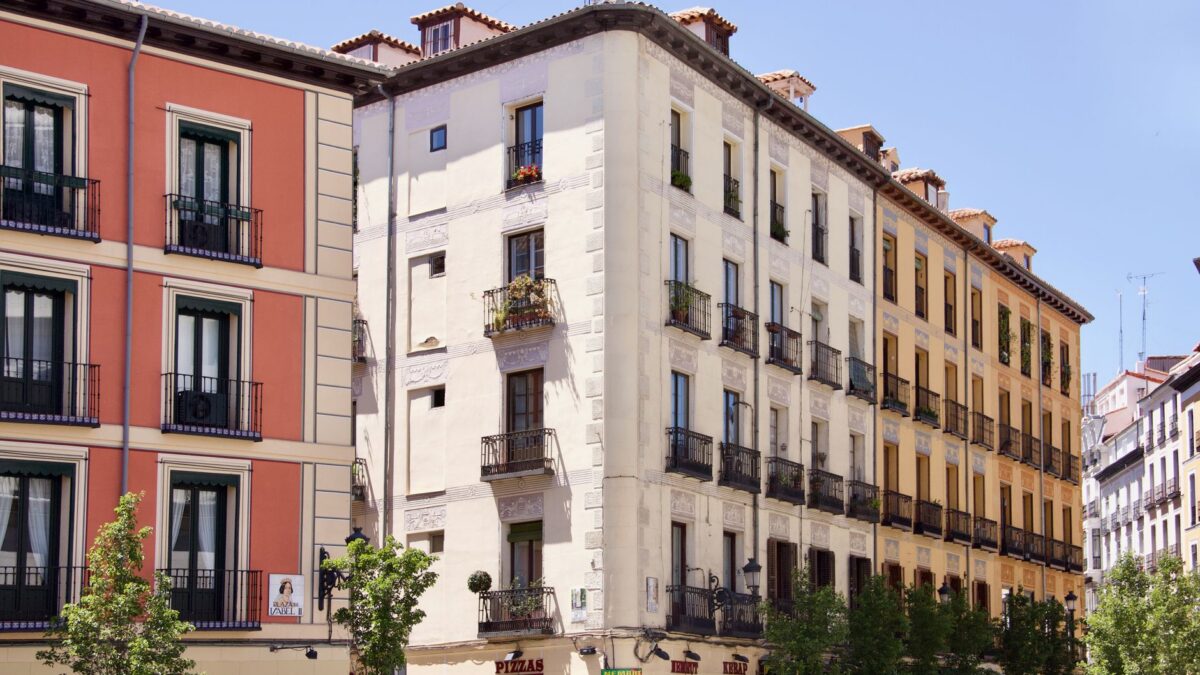
Residents of Lavapiés, in central Madrid, say drug dealers are using tourist apartments as narcopisos (flats used to sell drugs), according to a report in El Mundo. The report ties the problem to a very high concentration of short-term rentals in Embajadores, the barrio that contains Lavapiés, and to a steady loss of long-term neighbors.
Residents describe dealers offering drugs openly, fights on the same street within an hour and people collapsed from drug use, especially around Plaza de Lavapiés.
How many tourist flats are there in Embajadores?
Embajadores has eighteen hundred and sixty of the more than sixteen thousand apartments advertised on Airbnb in Madrid, according to data from the Inside Airbnb platform cited by the paper. That is more than a tenth of the city’s Airbnb supply in an area that covers 0.171% of the municipal territory. The density of tourist flats is almost 76 times higher than in the rest of the city.
Most of the listings belong to owners with several properties. Of those listings, 69% are held by owners with two or more flats in Madrid, and 358 belong to owners with 50 or more. The largest owner has 72 in Embajadores and 463 across Madrid.
Why are such flats hard to close?
A specialist investigator from the Policía Judicial (the judicial police) told GRAN MADRID that officers cannot enter a flat without a court order. To get one, they must tie the crime to that address and to specific people and show that selling drugs is a regular activity, not an isolated event.
The Policía Municipal (city police) estimates that such an investigation lasts six months on average. One of the fastest, in Calle Amparo, took two months of surveillance. An inquiry in Calle Juanelo lasted more than three years. In 2025, police carried out 118 operations against narcopisos in the Comunidad de Madrid, 12 of them in Centro.
Because investigations take months and dealers can move in less time, the El Mundo report says the concentration of flats within one square kilometer makes itinerant narcopisos harder to fight.
What do residents and neighborhood groups say?
Views on policing differ. Some residents suspect that police let things happen around the plaza. Manuel Osuna, president of the Asociación de Vecinos La Corrala (a neighborhood association), says the area has the most police presence in Madrid but the problem persists. He says the key is social intervention.
Osuna says recent police operations have reduced the number of fixed points of sale, but dealers are finding new methods, including tourist flats. Residents say it is hard to tell whether someone entering a building is a drug user or a tourist.
What this means for residents and visitors
The neighborhood is losing people. City statistics show Embajadores has about three thousand seven hundred fewer registered residents than in 2006, its historic peak, a fall of 7%. Osuna said he used to know 90% of the people in a bar and now knows fewer than 10%.
Foreign publications have also started to flag the area to travelers. The eSIM card company Roafly lists Lavapiés among the highest-risk zones for tourists in Madrid and mentions open drug sales at night. A guide in Japanese advises avoiding the area after ten at night, and some Chinese-language posts list it as a risk zone while noting that the problems are concentrated in a few blocks.
Source: El Mundo