Sanchez Admits Mistakes in Only TV Debate Before Nov. 29 Vote
Pedro Sanchez and Alberto Nunez Feijoo clashed on housing, prices and immigration in the campaign's only head-to-head debate before the Nov. 29 election.

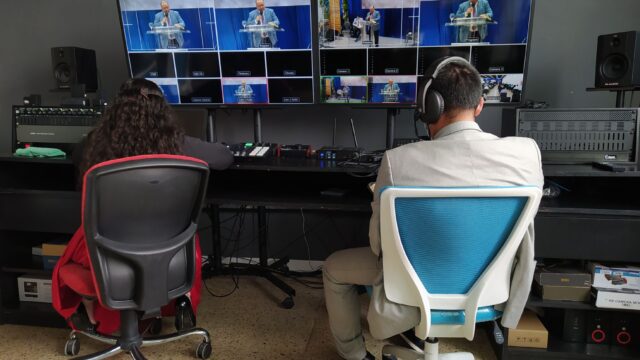
Prime Minister Pedro Sanchez said on Nov. 19 that his government had made “mistakes”, opening the only televised debate between the two main candidates before Spain’s general election on Nov. 29. According to AFP, he and Popular Party (PP) leader Alberto Nunez Feijoo repeatedly interrupted each other as they argued over the economy, housing, immigration, corruption, foreign policy and policies on women.
The result of the vote will decide who governs Spain, and polls cited by AFP point to a PP win without an absolute majority.
What each candidate said
Sanchez, of the Socialist Party, told viewers his government had not been perfect but had “always governed in the right direction”. He pointed to economic growth and employment figures and said Spain is in better shape than when he took office in 2018.
Feijoo rejected that claim. He said having a job does not guarantee a family can make ends meet or afford a home, and accused Sanchez of crushing the middle class. He listed rising prices, high taxes and the housing crisis among the government’s failures. He also raised corruption scandals that have affected Sanchez’s relatives and senior Socialists, and blamed the government for two high-speed train collisions in 2026 that together killed 115 people. “Spain deserves a respectable prime minister,” Feijoo said.
Housing and immigration
Housing is the issue that brought the vote forward. The election was originally due in 2027, AFP reported, but it came earlier after the right voted down the government’s measures for tenants. Feijoo said Sanchez had done too little to prevent the housing squeeze.
On immigration, Sanchez defended his government’s more liberal approach. In April, Spain approved a plan to grant legal status to hundreds of thousands of undocumented migrants already living in the country, provided they meet residency and other requirements. Feijoo answered that Sanchez is a “problem for Europe” on the issue and recalled the arrival of migrants in the city of Ceuta in July.
Why it matters: the role of Vox
If the PP wins the most seats without a majority, Vox could hold a decisive role. AFP describes Vox as the third-largest force in Parliament and notes that it has already governed with the PP at the regional level. Its leader, Santiago Abascal, did not take part in the debate. He said he was the one missing for there to be a real difference of opinions. A Vox government role would be the first time the far right has held power since the end of General Franco’s dictatorship in 1975.
Sanchez warned that a PP and Vox coalition would roll back social rights and economic gains.
Where the Socialists stand
The Socialists trail the PP in most polls. AFP also notes that other left-wing parties, whose support kept Sanchez in power after the 2023 election, are weaker now. After that vote the PP won more seats, but Sanchez stayed in office with an alliance of left-wing and regional separatist parties. AFP says he believes he can again defy predictions.
Voters go to the polls on Nov. 29.
Source: The Straits Times